
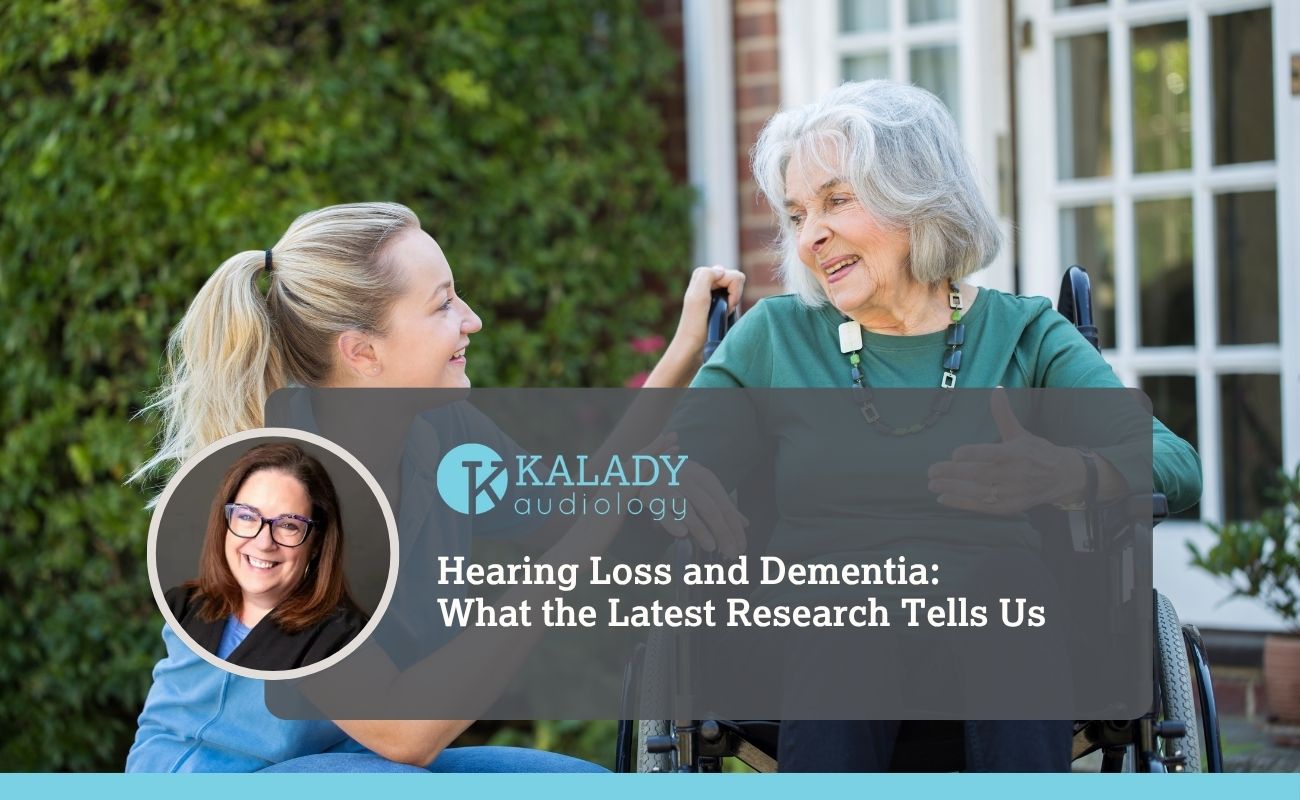
If you've been putting off dealing with your hearing loss, this might change your mind. Over the past decade, researchers have found a strong, consistent link between untreated hearing loss and dementia. More importantly, they have found that treating it may actually protect your brain.
The most cited research comes from Johns Hopkins, where Dr. Frank Lin found that adults with mild hearing loss were nearly twice as likely to develop dementia compared to those with normal hearing. Moderate loss tripled the risk. Severe loss was associated with five times the risk.
Then in 2023, a major clinical trial called ACHIEVE, published in The Lancet, found that treating hearing loss with hearing aids slowed cognitive decline by 48% in older adults at higher risk. That's not a small footnote; it's one of the strongest pieces of evidence yet that what you do about your hearing today can affect your brain health tomorrow.
It's a fair question. Here's what researchers think is happening.
First, there's the constant mental effort of straining to hear. When your brain is always working to fill in missing sounds by piecing together muffled words and guessing at conversation, it pulls resources away from memory and reasoning. Over years, that extra load adds up.
Second, hearing loss often leads to pulling back socially. Noisy restaurants feel overwhelming. Family gatherings get exhausting. You start staying home more. Social isolation is a well-established risk factor for dementia on its own, so the two problems feed each other.
Third, some research points to changes in brain structure. The areas responsible for processing sound may begin to shrink or lose function when they go unstimulated for long periods. The brain tends to hold onto what it uses.
None of this means hearing loss directly causes dementia in every case. The relationship is more nuanced than that. But the evidence keeps pointing the same direction.
Here's the part that doesn't get said enough. The average person waits seven years from noticing a problem to actually doing something about it. Seven years.
That's seven years of strained conversations, quiet withdrawal from things you used to enjoy, and a brain working overtime just to follow along. Hearing loss tends to sneak up gradually, which makes it easy to rationalize. People often think that others just mumble or that restaurants are simply too loud. Those things may be true, but they're not the whole story.
The research is clear that earlier action leads to better outcomes. Waiting doesn't just mean more missed conversations. It may mean missing a window to protect your cognitive health.
Hearing aids don't just make things louder. When they're fitted properly and worn consistently, they reduce the mental effort required to listen. They make it easier to stay engaged in conversation, stay connected with people you care about, and stay mentally active in daily life.
The ACHIEVE trial results suggest those benefits may go beyond communication. Re-engaging your auditory system and reducing that constant cognitive strain appears to have real, measurable effects on how the brain ages.
That's not a guarantee that hearing aids prevent dementia. But treating hearing loss is one of the few modifiable risk factors for cognitive decline we actually have solid evidence for. That's worth taking seriously.
A comprehensive hearing evaluation gives you a clear picture of what's happening. This includes how much loss you have, which frequencies are most affected, and what options make sense for you. From there, you and your audiologist can make decisions based on your actual hearing, not guesswork.
If you've been telling yourself you'll deal with it eventually, consider that "eventually" has a cost. The good news is that it's not too late to act, and the path forward starts with a single appointment.
At Kalady Audiology, Dr. Meg Kalady has been practicing audiology for over 37 years and is board certified by the American Board of Audiology. Every evaluation follows best practices, not as a formality, but because thoroughness is what leads to outcomes that actually last.
If you're ready to stop waiting, we're ready to help. Call us at 843-524-7920 to schedule your hearing evaluation at our Beaufort, SC practice.

Dr. Meg Kalady is from the Philadelphia suburbs and has been practicing audiology for the last 30 years. She completed her undergraduate and graduate degrees at Bloomsburg University of Pennsylvania, and she received her doctorate in audiology in 2012 from AT Still University.
Read more about the areas we serve.
.png)
.png)
.png)
.png)
.png)
Dr. Kalady is ready to help you take control of your hearing health. Contact our friendly practice to schedule a consultation.
Request a consultation.png)
.png)


.png)


